


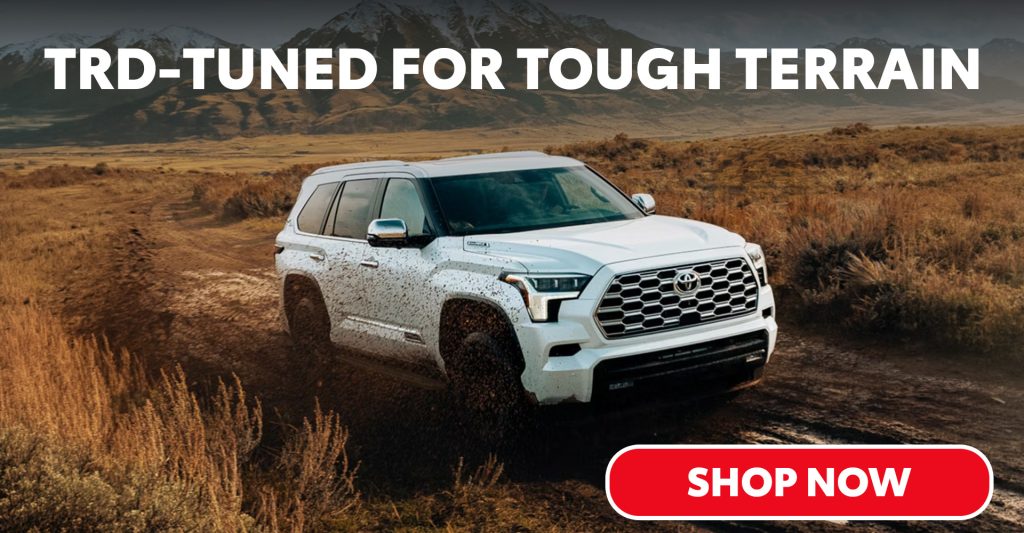
Toyota Sequoia Off-Road Capabilities: Adventure Starts Where the Pavement Ends
Many shoppers want one SUV that can carry family gear on Monday and reach a remote campsite on Saturday. For buyers comparing Toyota Sequoia’s off-road ability with smaller trail rigs, the right question is not whether it can leave pavement, but where its size, traction systems, and payload make sense. The Toyota Sequoia is a full-size body-on-frame SUV, so its strengths differ from a narrow, short-wheelbase trail vehicle. At Preston Toyota of Easton, we explain what the Toyota Sequoia does well off pavement, where it reaches its limits, and how to set it up for safer, smarter trail use. Begin browsing our Toyota Sequoia inventory online and head to our dealership for a test drive today!

What “Off-Road Capable” Means for a Toyota Sequoia
The Toyota Sequoia is off-road capable, but its strengths are more about confident adventure travel than extreme rock crawling. Its full-size build makes it a great fit for forest roads, snow routes, beach access, light rocky terrain, and overlanding, where space, comfort, and towing matter.
Because of its longer wheelbase and heavier weight, the Toyota Sequoia feels stable on rough roads but may be less nimble on tight trails than a smaller SUV like the Toyota 4Runner. Payload also matters; passengers, gear, and rooftop cargo can reduce clearance and put added stress on the tires, brakes, and suspension. In short, the Toyota Sequoia is built to take families, gear, and adventure essentials well beyond the pavement, comfortably and confidently.
Toyota Sequoia TRD Off-Road Package
The Toyota Sequoia offers available TRD off-road upgrades designed to boost capability on challenging terrain. Features include a TRD Pro suspension with FOX® shocks, TRD-tuned Bilstein® shocks, forged-aluminum BBS® wheels, and a TRD aluminum skid plate for added protection. Available technology, like the Multi-Terrain Monitor (MTM), provides front, side, and rear camera views to help navigate obstacles. In contrast, the available Load-Leveling Rear Height Control Air Suspension with Adaptive Variable Suspension (AVS) helps maintain comfort and control when carrying cargo or towing.
Hardware That Helps Off Pavement
The Toyota Sequoia’s off-pavement hardware works best when the driver understands what each component changes. Body-on-frame construction, available 4WD with low range, usable ground clearance, and a workable approach angle matter more on uneven terrain than headline horsepower figures. That hierarchy matters because traction is usually lost at the tire contact patch, not in the engine bay. Even strong power can become a liability if the front bumper drags at an obstacle or if a poor approach angle forces contact before the tires begin climbing.
Body-on-Frame Strength for Trails and Towing
A ladder-frame SUV handles repeated torsional loads and hitch stress better than many unibody crossovers. That structure gives the Toyota Sequoia a durable foundation for towing, washboard roads, and accessories such as skid plates, hitch carriers, and properly mounted recovery points. Frame strength also matters during recovery, where loads should move through rated hardware rather than improvised attachment spots. A recovery strap attached to approved recovery points reduces the chance of component damage, which is why recovery planning should happen before the vehicle gets stuck.
Hybrid Power Delivery Off-Road
Toyota’s i-FORCE MAX twin-turbo V6 hybrid gives the Toyota Sequoia strong low-end torque, which helps on steep grades and loaded climbs. Off-road, that torque matters most when delivered smoothly, because controlled throttle application preserves traction better than a fast stab at the pedal. The practical takeaway is that hybrid output helps the Toyota Sequoia maintain momentum without feeling strained under cargo or at altitude. On technical terrain, though, throttle modulation still determines the outcome, since wheelspin wastes grip and increases the risk of tire or underbody damage.
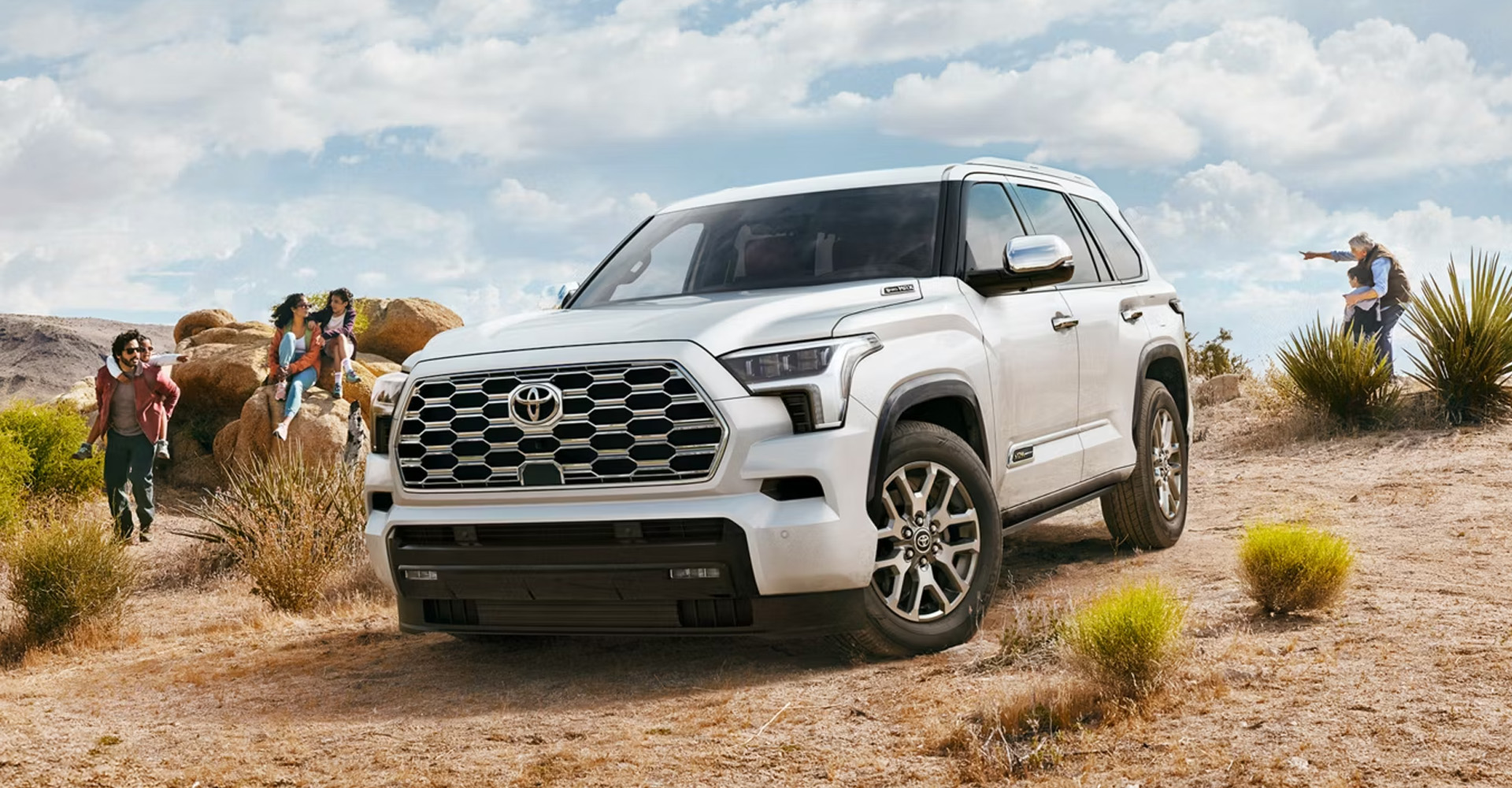
TRD Off-Road Features: What They Do and When to Use Them
TRD off-road features help the Toyota Sequoia tackle challenging terrain with greater confidence, but driver skill and proper technique still matter. Understanding when to use each feature can help maximize traction and control.
Multi-Terrain Select
Multi-Terrain Select adjusts throttle response and traction control settings to match conditions like sand, mud, or snow. Choosing the correct mode helps maintain traction and momentum on loose surfaces.
Crawl Control
Crawl Control automatically manages throttle and braking at low speeds, allowing drivers to focus on steering. It’s especially useful on steep climbs, rocky trails, and uneven descents where maintaining steady traction is important.
Electronic Locking Rear Differential
The electronic locking rear differential sends power evenly to both rear wheels when traction is limited. It can help the Toyota Sequoia maintain forward progress on rutted trails, loose surfaces, and uneven terrain.
Downhill Assist Control
Downhill Assist Control helps maintain a controlled speed on steep descents without constant brake input. This can improve stability and reduce driver workload on slippery or uneven downhill sections.
Multi-Terrain Monitor: Seeing What You Can’t From the Driver’s Seat
The Multi-Terrain Monitor provides front, side, and rear views to help with blind rises, rock placement, and tight obstacles. Its biggest advantage is confirmation, since committing a full-size SUV to a line without checking clearance can turn a minor obstacle into body damage. Use the cameras before the vehicle tips onto an obstacle, not after. The best line is the one you verify early, while there is still room to stop, adjust, or ask for a spotter.
Driver Information Displays: Keeping Eyes Up
The digital gauge cluster and available head-up display reduce glance time by placing key data where the driver can process it quickly. During slow-speed trail work, it supports better decisions about 4WD status, traction-system activity, and warnings tied to heat or drivetrain engagement. Useful information reduces hesitation, which is critical in a heavy SUV.
Suspension and Ride Control: Comfort vs. Clearance vs. Stability
The Toyota Sequoia’s stock suspension is tuned first for road comfort, passenger control, and towing stability. Off-road performance for the Toyota Sequoia depends less on ride softness than on travel, damping control, tire compliance, and how added weight changes the suspension’s working range. That means upgrades should follow use case, not catalog hype. Armor, roof racks, drawers, and camping gear all alter ride height, bottom-out resistance, and steering response, so the best setup is the one matched to the actual load.
TRD Off-Road Suspension Tuning
TRD Off-Road tuning aims to improve composure over rough roads, corrugations, and repeated small impacts. In practice, that means less bouncing after bumps, steadier steering on washboard, and fewer harsh bottom-out events than a softer road-focused setup. Drivers considering a TRD Pro should think about terrain frequency, not badge value. Suspension tuning delivers the biggest benefit on repeated rough surfaces, where control and heat management matter more than one dramatic obstacle.
Adaptive Variable Suspension and Rear Air Suspension (Where Equipped)
Adaptive Variable Suspension can improve body control on uneven highways and reduce porpoising on the way to trailheads. That matters for a family SUV because fatigue often starts before the trail begins, and damping control can preserve driver attention over long distances. Rear air suspension helps maintain ride height under cargo or trailer tongue weight. Keeping the rear level improves headlight aim, braking balance, and highway stability, all of which matter before the vehicle ever reaches dirt.
Towing and Off-Road: How to Combine Both Safely
A strong tow rating does not mean a trailer belongs on every dirt road. Off-road towing multiplies stress because trailer length, hitch weight, loose surfaces, and reduced departure angle all increase the chance of dragging, jackknifing, or losing momentum. The key judgment is knowing when the road has stopped being a road. Deep sand, sharp breakovers, and narrow switchbacks can turn a manageable tow into a recovery problem, especially with a long trailer behind a large SUV.
Trailer Tech and Control Features to Know
Trailer Backup Guide and Straight Path Assist can reduce stress in campsites, boat ramps, and tight staging areas. Those systems help with low-speed alignment, but they do not change the physics of trailer swing or the need for spotters in confined spaces. If a brake controller is installed on the trailer, test braking on flat ground before any descent. Controlled stopping should be confirmed early because downhill troubleshooting with a loaded trailer leaves little room for error.
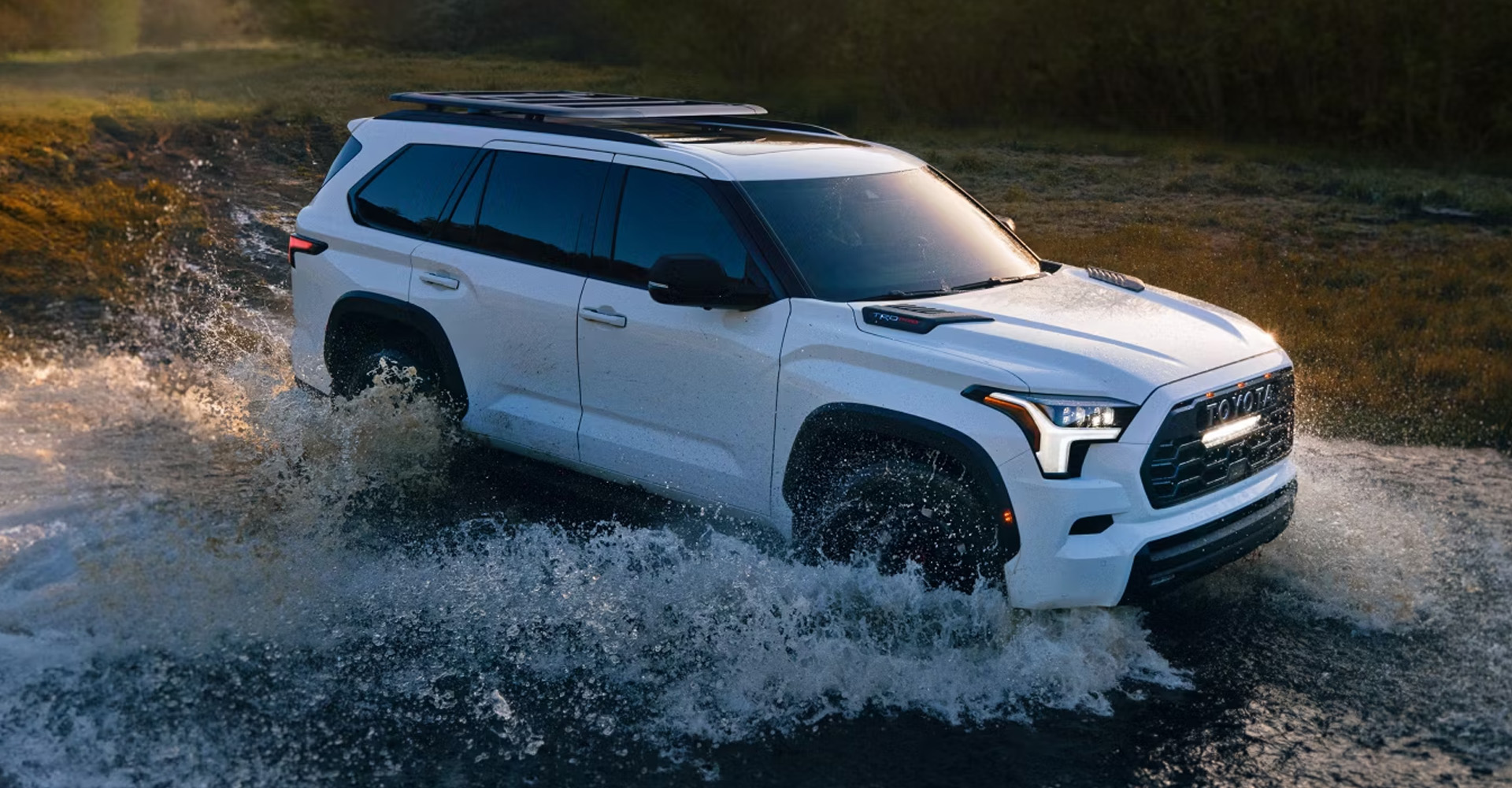
Real-World Scenarios: How the Toyota Sequoia Behaves on Common Terrain
The Toyota Sequoia performs best when the driver treats terrain as a traction-management problem rather than a power contest. Smooth throttle, measured steering, and patient braking matter on every surface, while the vehicle’s size remains the constant limit on narrow or technical trails. That mental model helps because each terrain type punishes a different mistake. Sand punishes hesitation, snow punishes overconfidence, mud punishes poor line choice, and rocks punish impatience.
Sand and Dunes
Lower tire pressure to increase the contact patch, maintain momentum, and avoid sharp steering that plows the front tires. Sand also builds heat under sustained load, so monitoring drivetrain temperatures on long climbs helps protect the vehicle from avoidable stress.
Snow and Ice
Tires decide winter traction before 4WD enters the conversation. The Toyota Sequoia can move confidently in snow, but stopping distances remain long, so gentle throttle and larger following gaps are mandatory, and chains may be the right answer where legal.
Mud and Ruts
Choose the shallowest line that protects the underbody and rocker area. Deep ruts can trap a wide SUV, and selective use of the locking rear differential helps limit one-wheel spin without creating unnecessary binding.
Rocks and Ledges
Go slowly, use a spotter, and place the tires deliberately rather than relying on the throttle. Skid plates and rock sliders can prevent trip-ending damage, because contact on rocks is often a matter of when, not if, in a long-wheelbase SUV.
Key Takeaways: Is the Toyota Sequoia a Good Off-Road SUV?
The Toyota Sequoia is a good off-road SUV for families who want one vehicle for road trips, towing, winter travel, and light-to-moderate trails. Its strongest advantages are cabin space, body-on-frame durability, hybrid torque, and trail tech that lowers workload in a large vehicle. Its biggest gains come from correct tires, correct pressures, and disciplined use of traction features. Its clearest limits are size, breakover angle, underbody exposure, and the reduced agility that comes with a full-size platform. Head to Preston Toyota of Easton to learn more about the Toyota Sequoia and take a test drive!
FAQs
Is the Toyota Sequoia good off-road?
Yes. With available 4WD and features such as Multi-Terrain Select, Crawl Control, and a locking rear differential, it can handle sand, snow, ruts, and moderate trails within its size and clearance limits.
Is the Toyota Sequoia as capable as the Toyota 4Runner?
Not on tight, technical trails where the Toyota 4Runner’s smaller footprint is easier to place and less likely to scrape. The Toyota Sequoia is stronger for family space, towing, and moderate off-pavement travel.
SHOP NOW


