



Engineered for the Edge: Toyota 4Runner Off-Road Specs
Toyota’s latest Toyota 4Runner off road lineup reaches up to 326 net combined horsepower, signaling how far midsize body-on-frame SUVs have evolved beyond the old trade-off between trail strength and daily drivability. For drivers researching Toyota 4Runner off-road specs around Easton, MD, the key discovery is that capability comes from a system of components working together, not just a badge or a single feature. Along the Eastern Shore, where surfaces shift from gravel to mud to soft shoreline terrain, the ability to handle sand conditions and wet ground with the Toyota 4Runner is just as important as horsepower. This is where the Toyota 4Runner proves its value. Visit Preston Toyota of Easton to learn more and test drive a Toyota 4Runner today!

Why Easton Drivers Choose the Toyota 4Runner for Off-Road Adventures
Easton drivers need a vehicle that handles both daily driving and weekend exploration with ease. The Toyota 4Runner TRD Off-Road stands out by combining durability, comfort, and real off-road capability. Its body-on-frame design adds strength for rough roads, towing, and carrying gear, making it well-suited for Chesapeake Bay conditions. Still, performance depends on setup and skill, including drivetrain, tires, terrain, and driver control, so capability can vary even between similar models.
Off-Road vs. Overlanding: Where the Toyota 4Runner Fits
Understanding the difference between off-roading and overlanding helps drivers choose the right trim:
- Off-roading = technical terrain, traction, and control
- Overlanding = longer trips, gear hauling, and self-sufficiency
The Toyota 4Runner TRD Off-Road and Toyota 4Runner TRD Pro are built for trail performance, while the Toyota 4Runner Trailhunter is designed for overlanding, perfect for extended trips and Toyota 4Runner camping setups.
Powertrains That Support Off-Road Confidence
The standard i-FORCE 2.4L turbo engine delivers 278 horsepower and 317 lb.-ft. of torque, paired with an 8-speed automatic transmission for smooth, controlled power that works well on changing surfaces like gravel or mud.
The available i-FORCE MAX hybrid engine increases output to 326 horsepower and 465 lb.-ft. of torque, improving low-speed response and pulling strength. In off-road conditions, torque is key because it helps maintain traction and steady momentum across sand, climbs, and uneven terrain.
Drive Modes Explained: Sport S, Eco, Normal, and More
The Toyota 4Runner’s drive modes shape throttle response and transmission behavior, which changes how the SUV feels even before four-wheel-drive systems enter the equation. Sport S sharpens acceleration, Eco prioritizes fuel efficiency, and Normal balances response for mixed use, giving Easton drivers a straightforward way to tailor the vehicle to road conditions.
Available Comfort and Sport S+ modes add more tuning range on certain configurations. Those settings matter because driver confidence often comes from predictability, and a vehicle that responds consistently is easier to place on wet pavement, narrow shoulders, or loose surfaces.
For local use, Normal often suits commuting through Easton and along Route 50 because it avoids the dulled response of Eco and the extra eagerness of Sport S. Eco can make sense for longer coastal drives toward St. Michaels or Cambridge, while Sport S is more useful for highway merging or passing than for technical off-road sections.
Traction and Low-Speed Control: MTS and Crawl Control
Available Multi-Terrain Select (MTS) helps the Toyota 4Runner adjust traction strategy for different surfaces and speeds, which can improve how power and braking are managed on loose or uneven ground. The core value of MTS is not magic traction but smarter intervention, as it helps the vehicle respond in ways that better match sand, mud, or rough terrain.
Available Crawl Control (CRAWL) automatically manages throttle modulation and brake modulation at low speed so the driver can focus on steering. That matters on difficult terrain because many off-road mistakes begin with too much pedal input, not too little hardware.
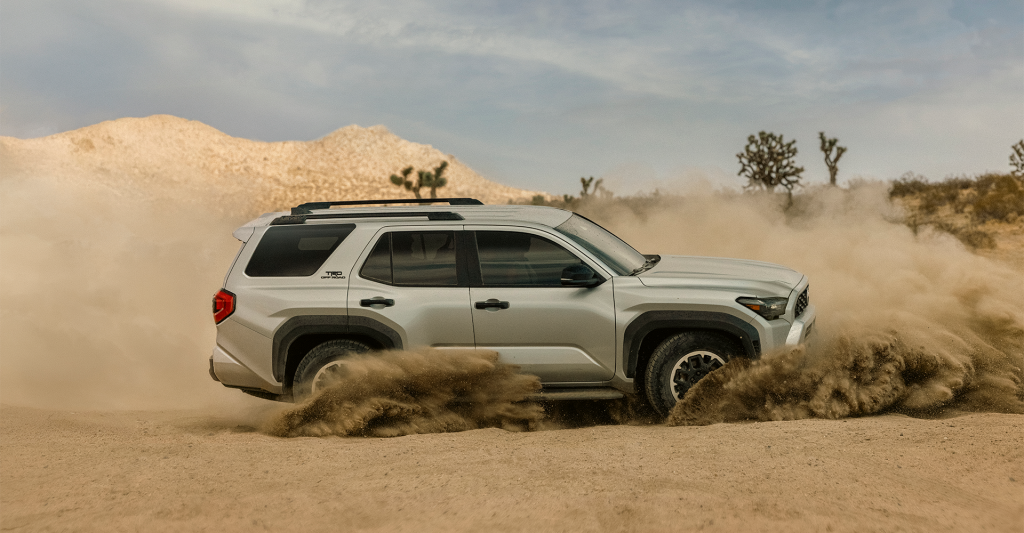
These systems are most useful in loose sand, slick mud, uneven ruts, and slow descents where maintaining composure matters more than moving quickly. On the Eastern Shore, where wet ground can turn from firm to slippery after a small weather shift, low-speed control features reduce the need for abrupt corrections.
How to Use Crawl Control Safely
Use Crawl Control at low speeds and keep the wheels pointed in the direction you want the vehicle to travel. Sudden steering inputs on slippery terrain can upset traction, even when the system is managing speed well. A spotter adds safety when visibility is limited by brush, dunes, or ruts. Camera systems help, but spoken guidance from outside the vehicle often alerts drivers to hazards before the tires reach them.
Multi-Terrain Select: What It Changes and What It Doesn’t
MTS changes how the Toyota 4Runner manages traction, but it cannot overcome poor tires, excess speed, or a bad line. That distinction matters because many drivers overestimate the role of electronic systems and underestimate the effects of all-terrain tires (A/T) and driver restraint. Airing down can improve footprint and ride compliance where legal and appropriate, especially for Toyota 4Runner sand driving. Highway travel requires inflation, because low tire pressure that helps on soft terrain can create heat and instability at road speed.
Locking Rear Differential: Why It’s a Big Deal Off Pavement
The available electronic locking rear differential is one of the Toyota 4Runner’s most meaningful off-road tools because it forces both rear wheels to spin in tandem even if one has less traction. That mechanical coupling can keep the vehicle moving in situations where traction control alone would spend more time reacting than advancing. Cross-axle ruts, uneven traction, and slick climbs are classic locker scenarios. If one rear tire hangs light or lands on a slippery patch, the locker helps send usable drive force to the tire with grip instead of letting the easier-spinning wheel waste momentum. Best practice is to engage the locker at low speed and in as straight a line as the obstacle allows. High-traction surfaces create driveline stress when both rear wheels are locked together, so disengaging after the obstacle is part of using the feature correctly.
Locking Diff vs. Traction Control
Traction control manages wheelspin by reducing engine output or applying brake force to a spinning wheel. A locker changes the mechanical relationship between the rear wheels, allowing it to maintain forward motion in conditions where brake-based intervention becomes less effective. The right tool depends on the obstacle. Using a locker where traction control would suffice can add unnecessary strain, while relying only on traction control in deep articulation can leave capability unused.
Stabilizer Disconnect Mechanism (SDM) and Suspension Articulation
The available Stabilizer Disconnect Mechanism (SDM) allows greater suspension articulation on uneven terrain by reducing the stabilizer bar’s limiting effect. More articulation helps keep tires in contact with the ground, and tire contact is the foundation of traction, no matter how advanced the electronics are. Suspension articulation matters because off-road travel often lifts one corner of the vehicle while compressing another. A Toyota 4Runner that keeps more rubber on the surface can climb and descend with less drama, less wheelspin, and fewer abrupt body motions. Driver behavior still shapes the result. Slow, smooth inputs reduce bouncing and component strain, while aggressive throttle on articulated terrain can shock the suspension and unsettle the chassis.
Tips for Sandy and Rutted Trails Near Easton
On sandy sections, steady momentum usually works better than bursts of throttle. Digging down with sudden power often creates resistance, which is why controlled input matters more than engine output in soft ground. On rutted trails, choose a line that minimizes diagonal wheel lift. That approach keeps the chassis more settled and helps the Toyota 4Runner use its articulation advantage rather than fighting a crossed-up stance.
TNGA-F Chassis: Body-on-Frame Strength
The Toyota 4Runner is built on the TNGA-F body-on-frame platform, delivering the strength and rigidity needed for off-road durability and a more controlled ride on rough or uneven surfaces. Its boxed frame and added rust protection are especially valuable in areas like Easton, MD, where moisture, salt, and coastal conditions can lead to corrosion. This durable foundation helps the suspension perform consistently, improving both trail capability and everyday comfort.
Toyota 4Runner TRD Off-Road: Who It’s Built For and What Sets It Apart
The Toyota 4Runner TRD Off-Road, along with the TRD Pro and the broader TRD lineup, is designed for drivers who split their time between everyday roads and rugged trails. It’s ideal for those who want genuine off-road capability without committing to a fully specialized build. The Toyota 4Runner TRD Off-Road ground clearance plays a key role in that capability, but it delivers the most value when combined with the right tires and proper underbody protection, ensuring confidence across uneven, unpredictable terrain.
Toyota 4Runner Trailhunter Highlights: Underbody Plating and Fuel-Tank Protection
The Toyota Trailhunter stands out as the overlanding-focused version of the Toyota 4Runner, and its hardware reflects that mission. Steel skid plates, underbody protection, and fuel-tank protection are not cosmetic additions because they reduce the risk of trip-ending damage from rocks, stumps, and hidden debris. That protection matters most on longer routes where self-sufficiency becomes part of safety. An exposed fuel tank or vulnerable underbody component can turn a minor impact into a stranded vehicle, which is why overlanding builds often prioritize protection before adding appearance upgrades. A useful gear mindset matches the Toyota 4Runner Trailhunter’s design. Recovery points, a shovel, and a tire repair kit support the same goal as underbody armor: preserving mobility when the route gets rough, and help is not close.
Overlanding Setup Basics
Start with water, first aid, navigation, recovery gear, and a communication plan. Overlanding rewards preparation because distance and time amplify small problems that would feel minor on a short local drive. Load placement matters as much as gear choice. Heavy equipment should stay low and secured, because roof-heavy packing increases body roll and makes an already tall SUV less stable on uneven ground.
Off-Road Tech That Helps You Place Wheels and Protect the Vehicle
The available Multi-Terrain Monitor (MTM) provides drivers with a real-time view around and beneath the vehicle, making it easier to place the wheels and avoid underbody damage—especially at low speeds when visibility is limited. A larger touchscreen helps improve clarity, reducing hesitation when navigating obstacles like ruts or steep crests. The available Tow Technology Package adds confidence for drivers hauling boats, trailers, or camping gear. MTM is most useful in tight or uneven terrain, but while cameras enhance visibility, a spotter is still valuable for guiding clearance and positioning.
How to Choose the Right Toyota 4Runner Trim for Off-Roading
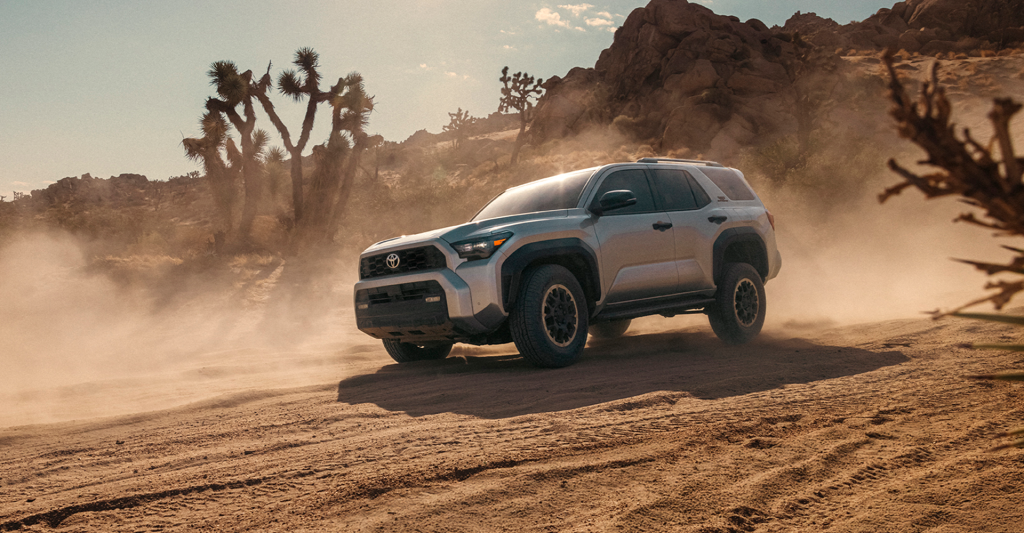
Choosing the right Toyota 4Runner trim comes down to how you plan to drive, not just feature lists. Systems like MTS and Crawl Control help with traction, while a locking rear differential and SDM support tougher terrain. The Toyota 4Runner Trailhunter is better suited for overlanding, while drivetrain options like 2WD, part-time 4WD, and full-time 4WD influence how the vehicle handles different surfaces. For beginners, focus on traction tools and quality all-terrain tires first. As skills and trail difficulty increase, features like lockers and added articulation become more valuable, helping you grow into the vehicle without overreaching.
Places and Terrain Types Around Easton, MD
Easton’s landscape, shaped by the Chesapeake Bay and nearby rivers, brings a mix of sand, moisture, and seasonal softness. That means Toyota 4Runner off-road driving here focuses less on rock crawling and more on maintaining traction across wet, mixed surfaces. Common conditions include sandy shoulders, gravel roads, muddy lanes (where permitted), and slick ground after rain, making controlled driving, proper tires, and respect for legal access essential.
Before and After the Trail: Smart Prep and Care
A great off-road trip starts with preparation. Before heading out, check tire condition and pressure, confirm your spare is accessible, and inspect fluids and brakes. Pack essential gear like a tow strap, shackles, gloves, a flashlight, a first-aid kit, and a charged phone. If possible, travel with another vehicle and share your route for added safety. After your trip, a quick cleanup goes a long way. Rinse the underbody to remove sand, mud, or salt that can cause corrosion. On the drive home, watch for vibrations, steering changes, or unusual noises, often caused by debris that’s easy to fix if caught early.
Put the Toyota 4Runner to the Test
Don’t hesitate to venture out. Head over to Preston Toyota of Easton to view our inventory of off-road-ready Toyota 4Runner models today!
FAQs
Is a Toyota 4Runner good for off-road driving?
Yes. With available features like Multi-Terrain Select, Crawl Control, an electronic locking rear differential, and a body-on-frame TNGA-F platform, the Toyota 4Runner is built for trail use when properly equipped and driven with the right tires.
What is Multi-Terrain Select on the Toyota 4Runner?
Multi-Terrain Select (MTS) is an available system that adjusts the traction strategy for different surfaces. It changes how power and braking are managed at varying speeds, which can help on sand, mud, and uneven ground.
What does Crawl Control do on a Toyota 4Runner?
Crawl Control (CRAWL) is an available low-speed system that automatically manages throttle and brakes. That allows the driver to focus on steering and wheel placement over difficult terrain.
What does a locking rear differential do off-road?
An electronic locking rear differential locks the rear wheels together so they spin in tandem. That helps maintain forward motion when one rear wheel has less traction than the other.
Is the Toyota 4Runner Trailhunter made for overlanding?
Yes. The Toyota 4Runner Trailhunter is designed for overlanding and includes steel underbody plating and fuel-tank protection, which support longer trips on rough routes.
What is the Toyota 4Runner’s Ground Clearance?
The Toyota 4Runner offers up to 10.1 in. of ground clearance on select configurations.
SHOP NOW


